
Start Your ISO 27001 Journey
Gap assessment → implementation → certification audit. End-to-end support from CERT-In empanelled experts.
What is ISMS — Information Security Management System?
An Information Security Management System (ISMS) is a systematic framework of policies, processes, and controls that an organisation uses to manage and protect its information assets. The international standard for ISMS is ISO/IEC 27001:2022, which specifies requirements for establishing, implementing, maintaining, and continually improving an ISMS. MDIT Services helps Indian businesses design, implement, and certify their ISMS under ISO 27001.
ISO 27001 ISMS — Key Components
| Component | What It Covers |
|---|---|
| Information Security Policy | Top-level management commitment and security objectives statement |
| Risk Assessment | Identify assets, threats, vulnerabilities, and risk levels |
| Statement of Applicability (SoA) | Documents which Annex A controls apply and their implementation status |
| Internal Audit Programme | Planned audits to verify ISMS effectiveness and compliance |
| Management Review | Periodic senior management review of ISMS performance |
| Corrective Action | Process to investigate and eliminate root causes of nonconformities |
ISMS Implementation Steps — ISO 27001
- Scope Definition — Define ISMS boundaries: business units, locations, systems, data types
- Gap Assessment — Compare current posture against ISO 27001:2022; prioritise remediation
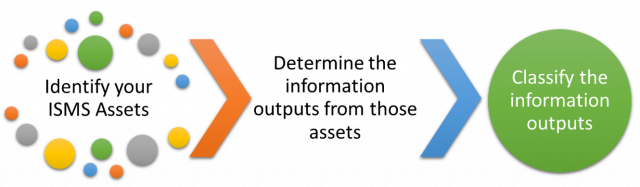
- Risk Assessment & Treatment — Identify assets, assess threats, develop risk treatment plan
- Control Implementation — Implement selected Annex A controls; create required policies and records
- Internal Audit & Management Review — Conduct internal ISMS audit; close nonconformities
- Certification Audit — Stage 1 (document review) and Stage 2 (on-site audit) by accredited body
Frequently Asked Questions — ISMS
What is the difference between ISMS and ISO 27001?
An ISMS is the management system itself — the policies, processes, and controls. ISO 27001 is the international standard specifying requirements for an ISMS and providing the framework for third-party certification. ISO 27001 certification proves to external parties that your ISMS meets an internationally accepted standard.
How long does ISMS implementation take?
Implementation and ISO 27001 certification typically takes 3–12 months depending on organisation size and current maturity. Small businesses (under 100 employees) with good existing controls can achieve certification in 3–5 months. Large enterprises may require 9–12 months.
Is ISO 27001 mandatory in India?
ISO 27001 is not legally mandatory for most Indian sectors, but required as a vendor qualification by enterprise clients, government tenders, and MNCs. RBI-regulated entities and SEBI-registered intermediaries face increasing pressure to demonstrate information security maturity, for which ISO 27001 is the most accepted framework.
What does MDIT Services provide for ISMS implementation?
MDIT Services provides end-to-end ISO 27001 ISMS consulting: gap assessment, risk assessment, Annex A control implementation, policy documentation (30+ templates), internal auditor training, and certification body liaison. Contact info@mditservices.in for a free 30-minute consultation.